
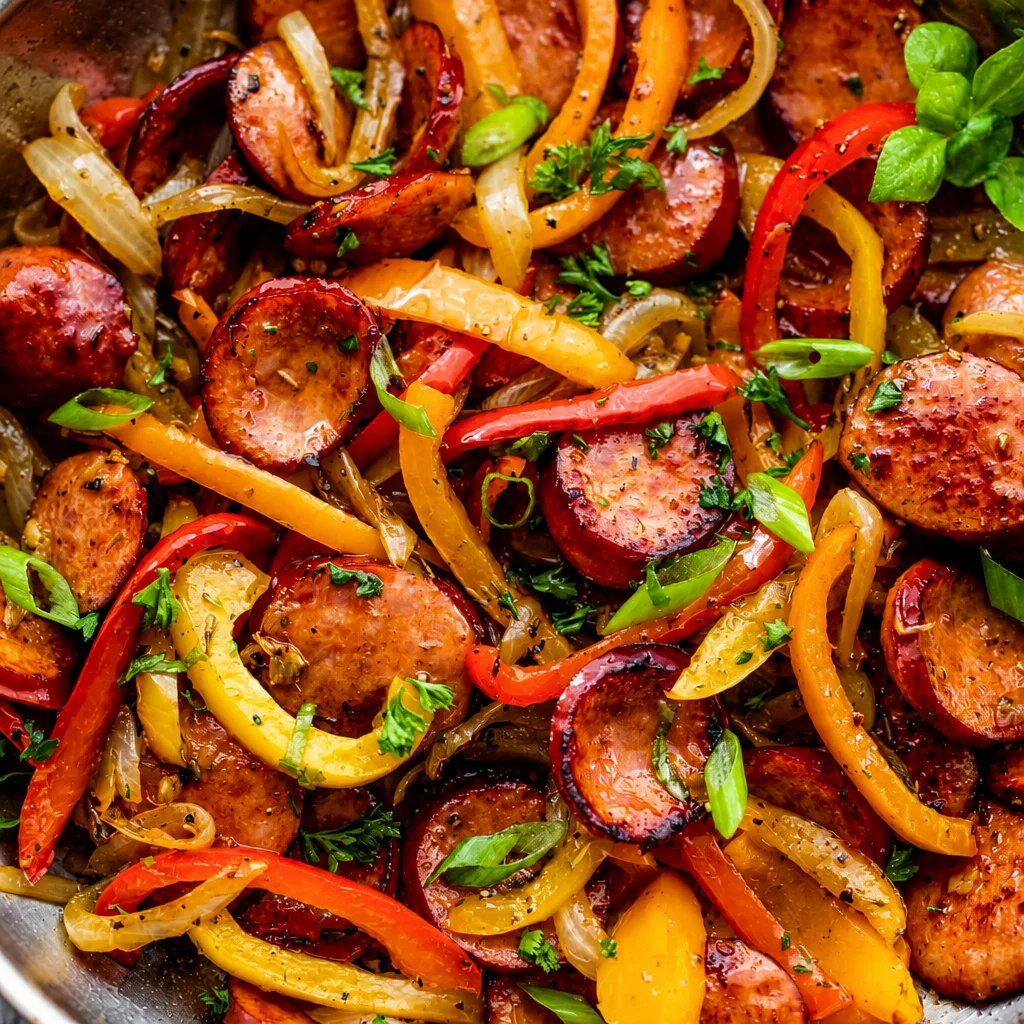
Sausage and pepper skillet. That little phrase has saved my dinner plans more times than I can count. You know those nights when you are tired, hungry, and not in the mood to wash a bunch of dishes? This is the kind of meal that feels like real food without turning your kitchen into a disaster zone. It is bold, a little smoky, a little sweet from the peppers, and honestly just comforting. If you have about 25 to 30 minutes, you can pull off a dinner that looks and smells like you tried way harder than you did. 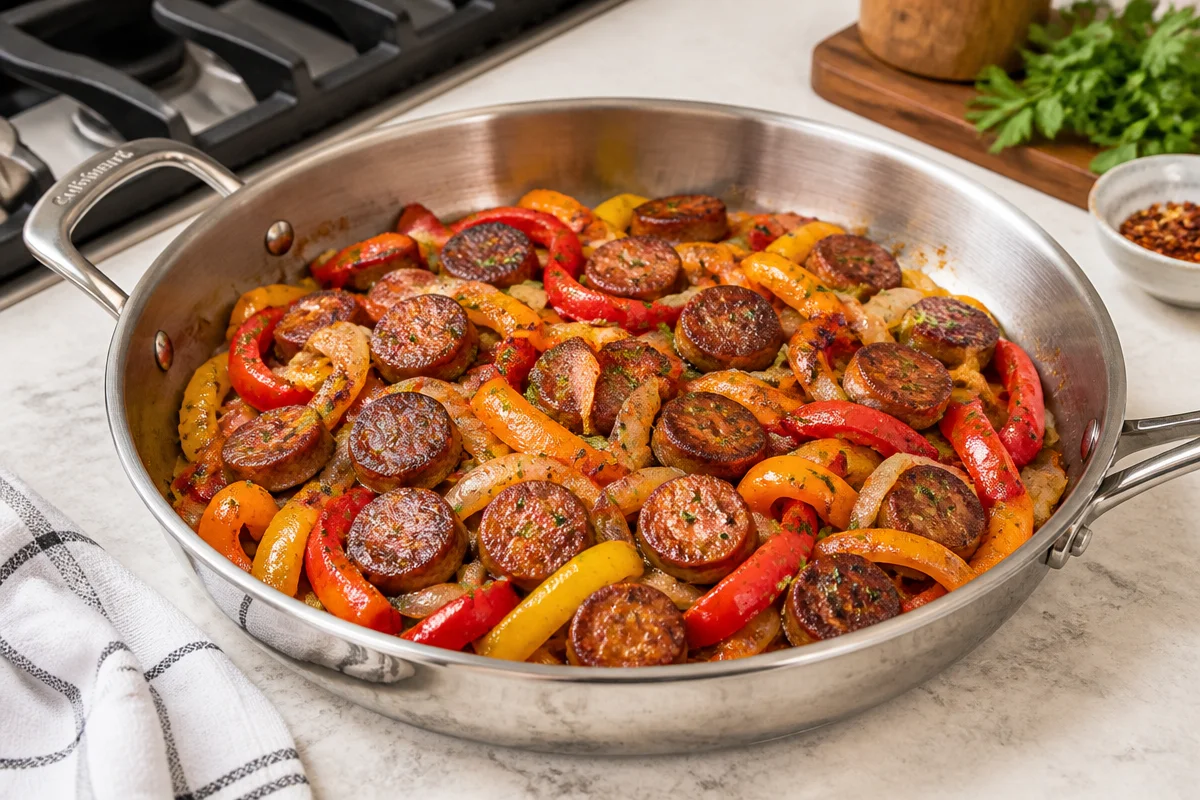
Ingredients You’ll Need
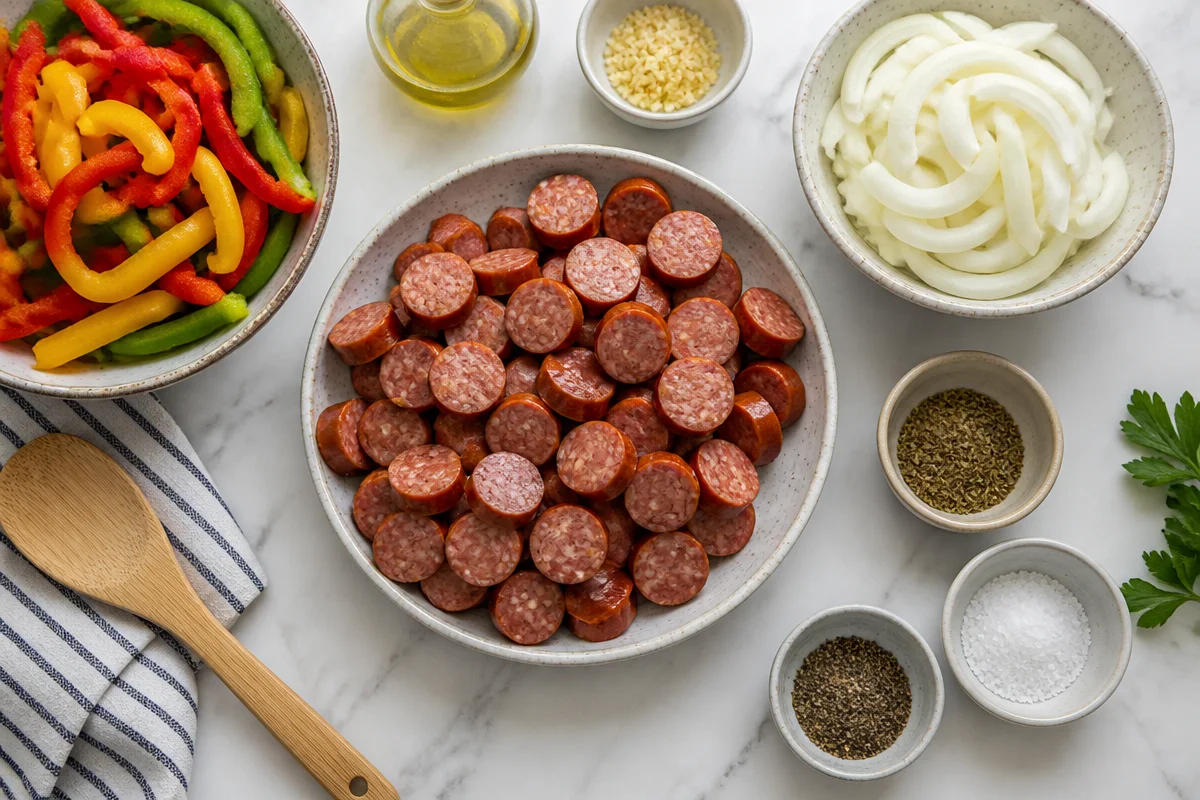
I love this recipe because the shopping list is short and everything is easy to find. You can keep it classic, or you can use what you have in the fridge. The key is making sure your sausage brings good flavor, because it seasons the whole pan.
- Sausage: 1 to 1.25 pounds, sliced into coins or half moons. Italian sausage is the usual pick, but use what you like.
- Bell peppers: 3 total, any colors. I like a mix because it looks pretty and tastes balanced.
- Onion: 1 large, sliced.
- Garlic: 3 to 4 cloves, minced (or 1 teaspoon garlic powder if you are in a hurry).
- Olive oil: 1 to 2 tablespoons, just enough to get things going.
- Seasonings: salt, black pepper, dried oregano, and optional red pepper flakes for heat.
- Tomato flavor (optional): 2 tablespoons tomato paste or a splash of crushed tomatoes if you want it a little saucy.
- Acid to finish: a small splash of vinegar or a squeeze of lemon wakes everything up right at the end.
A quick tip from my own trial and error: if your sausage is already super seasoned (some brands are salty), go easy on adding extra salt until the end. You can always add more, but you cannot take it out.
How to Make Sausage and Peppers
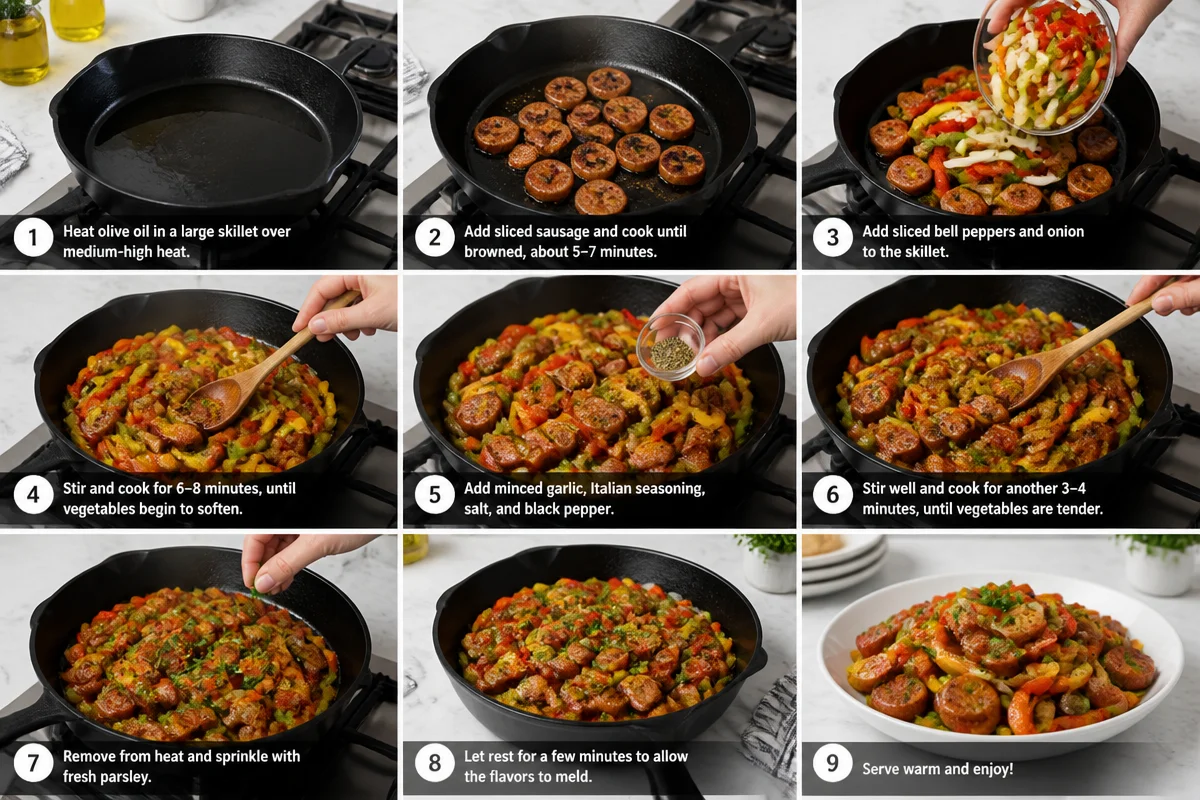
This is a true one pan situation, and it is hard to mess up. The order matters a bit, though, because you want the sausage browned and the peppers still a little lively, not mushy.
Step by step in one skillet
1) Heat a big skillet on medium to medium high. Add olive oil if your sausage is lean. If it is a fatty sausage, you might not need much oil at all.
2) Add sliced sausage in a single layer. Let it sit for a few minutes before stirring. You want those browned edges, because that is where the flavor lives. Stir and brown the other side. If there is a lot of grease, spoon out a little, but leave a bit behind because it flavors the veggies.
3) Add your sliced onions and peppers. Toss them around in the sausage drippings. Cook for about 8 to 10 minutes, stirring now and then, until they soften but still have a tiny bit of bite.
4) Add garlic, oregano, black pepper, and red pepper flakes if using. Stir for about 30 seconds. Garlic can burn fast, so this is one of those moments where you stay close to the pan.
5) Optional: stir in tomato paste and cook it for a minute so it tastes richer, not raw. If you want it looser, add a splash of water or a few spoonfuls of crushed tomatoes.
6) Taste and adjust. Add salt only if it needs it. Finish with a tiny splash of vinegar or lemon juice. It sounds small, but it makes everything taste brighter.
When it is done, your kitchen will smell like a cozy little Italian place, and the sausage and pepper skillet will be glossy and colorful, not watery. If your peppers release a lot of liquid, just simmer for a couple extra minutes to cook it off.
“I made this on a weeknight when I was exhausted, and it turned out better than takeout. The peppers were sweet, the sausage was crisp, and I only had one pan to wash.”
Serving Suggestions
This is where you can really make it fit your mood. Sometimes I keep it super simple, sometimes I turn it into a big comfort meal. Either way, it is the kind of dish that makes people hover around the stove sneaking bites.
- Stuff it into toasted hoagie rolls for easy sausage and pepper sandwiches. Add a little mustard or melted provolone if you are feeling extra.
- Spoon it over rice, quinoa, or couscous to soak up all the pan juices.
- Serve it over mashed potatoes for maximum comfort.
- Toss it with pasta and a splash of pasta water to make it feel like a full-on pasta night.
- Go lighter and serve it with a simple salad and some crusty bread.
If I am feeding a crowd, I put the skillet on the table and let everyone build their own plate. It is casual, it is fun, and it keeps me from making five different meals for picky people.
Leftovers and Storage
Leftovers are honestly one of the best parts. The flavors settle in overnight, and it reheats like a dream. I have even eaten it cold out of the fridge while deciding what to make for lunch, no shame.
Here is how I keep it:
Fridge: Store in an airtight container for up to 4 days.
Freezer: Freeze for up to 2 months. I like freezing in flat portions so it thaws faster.
Reheating: Warm it in a skillet over medium heat with a tiny splash of water to loosen things up. Microwave works too, but the skillet brings back the best texture.
One more real life tip: if you know you want leftovers, cook the peppers just until tender. Overcooked peppers get softer after reheating, so starting with a little texture helps the next day.
Substitutions and Variations
This recipe is flexible, which is a huge reason it stays in my regular rotation. You can make it spicy, make it mild, or stretch it with extra veggies when your fridge is looking sad.
Easy swaps that still taste great
Sausage options: Use chicken sausage, turkey sausage, or even a plant-based sausage if that is your thing. Just brown it well so it gets that satisfying bite.
More veggies: Add sliced mushrooms, zucchini, or even a handful of spinach at the end. If you add mushrooms, cook them early so they do not steam everything.
Make it spicy: Use hot Italian sausage or add extra red pepper flakes.
Make it sweeter: Use more red and orange peppers, and let the onions cook a little longer.
Cheesy finish: A sprinkle of Parmesan or a few slices of provolone melted on top takes it into comfort food territory fast.
If you want to keep it low carb, serve it in a bowl with a little cauliflower rice. And if you want it more filling, add white beans at the end and let them warm through. It turns the sausage and pepper skillet into something that feels extra hearty without much effort.
Common Questions
Can I use pre-cooked sausage?
Yes. You will still want to brown it a bit for flavor, but it will cook faster. Add it back in near the end if you are worried about it drying out.
How do I keep the peppers from getting soggy?
Cook on medium to medium high and do not overcrowd the pan. If your skillet is small, cook the sausage first, then cook the veggies in batches, then combine.
Should I cover the skillet while cooking?
I usually do not. Covering traps steam, and that makes the peppers softer. If your onions are taking too long, you can cover for 2 minutes, then uncover again.
Can I make this ahead for meal prep?
Totally. It holds up well for a few days. Just keep the bread or rice separate until you are ready to eat.
What is the best skillet to use?
Anything wide and heavy works best, like cast iron or a large stainless steel pan. More surface area means better browning and less steaming.
A quick dinner you will come back to
If you need a reliable weeknight win, this sausage and pepper skillet is it. It is fast, it is flavorful, and it is the kind of meal that makes you feel taken care of even when you are cooking on autopilot. Keep the ingredients simple, brown the sausage well, and do not overcook the peppers. If you want to compare a couple other solid takes, check out Sausage and Peppers Recipe – Diethood and One-Skillet Sausage and Peppers Recipe. Now go grab that skillet and make dinner happen tonight.